
B-Vent Conversions: A Smarter, More Economical Alternative to Rebuilding Old Brick Chimneys
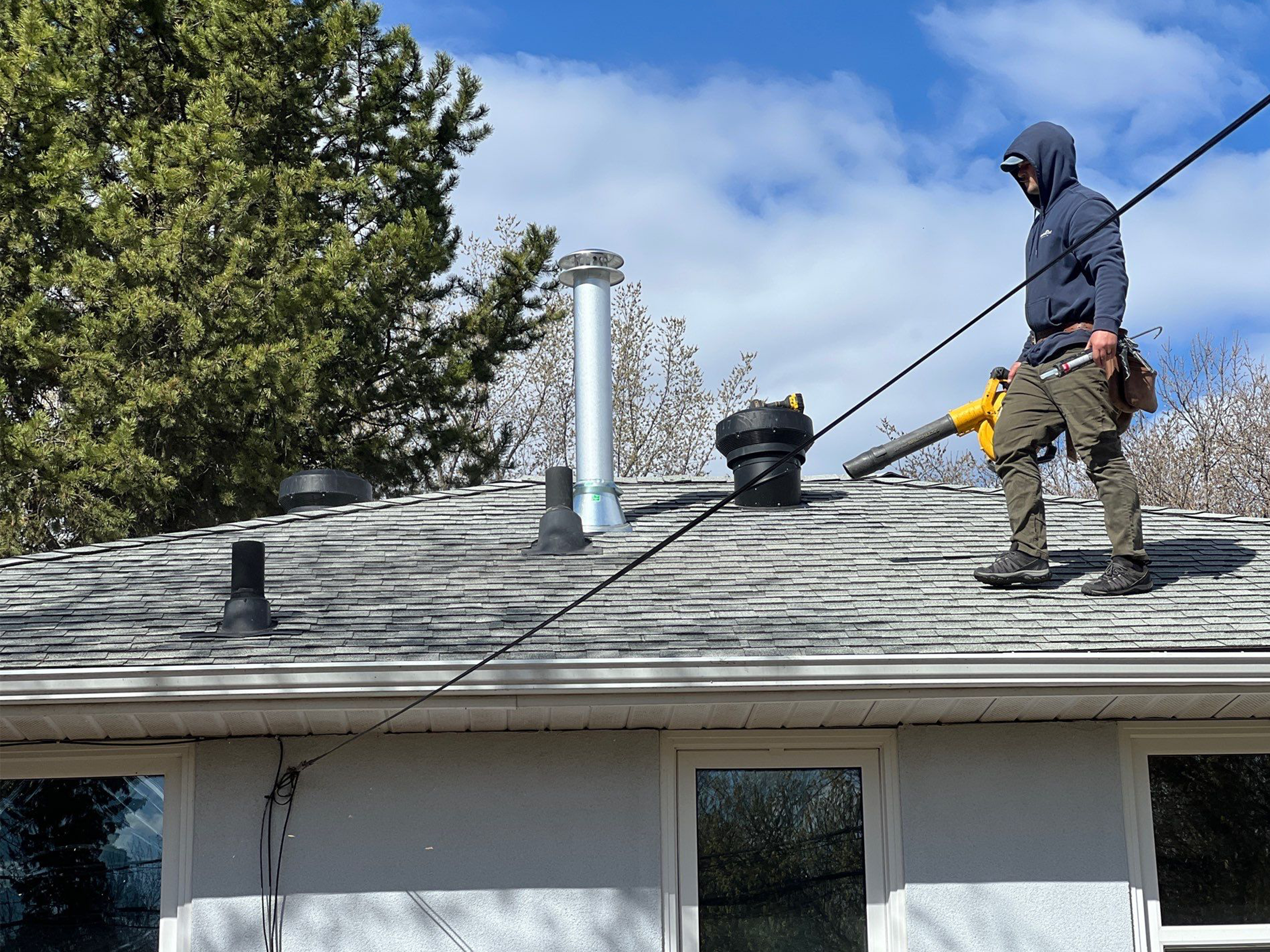
If you have an older home, there’s a good chance your furnace or hot water tank vents through a brick chimney.
And inside that chimney?
Usually just a metal B-Vent pipe running up through the flue and out the top.
Which leads to a fair question we hear all the time at Weatherproof Roofing Inc.:
“If the brick chimney is falling apart… do I really need to rebuild the whole thing?”
In many cases — no.
There’s often a much simpler, more economical solution:
A B-Vent conversion.
Especially here in Edmonton, where aging masonry chimneys are failing faster due to freeze–thaw cycles.
Let’s walk through it.
The Situation We See All the Time
Many older brick chimneys aren’t fireplaces anymore.
They’re just acting as a holder for a small metal exhaust pipe.
So you’ve got:
A large, heavy brick structure
With a skinny B-Vent pipe inside
Only used to vent a furnace or water heater
Meanwhile the brick is:
Cracking
Spalling
Leaning
Losing mortar
Letting water in
At that point, the brick isn’t doing anything useful…
It’s just becoming a liability.
That’s when alternatives to replacing the brick chimney start to make a lot more sense.
Option 1: Rebuild the Brick Chimney
Yes, we can absolutely do this.
A proper rebuild includes:
Replacing damaged bricks
New mortar
New concrete cap
Chimney flashing repair and replacement
Structural stabilization
And it looks great when finished.
But it’s also:
More labor intensive
More materials
More cost
Which often doesn’t make sense if the chimney only houses a vent pipe.
You’re basically rebuilding a large masonry structure that isn’t needed anymore.
Option 2 (Often Smarter): B-Vent Conversion
This is where conversions come in.
Instead of rebuilding the brick, we:
Step 1 Remove the brick chimney down to the roof deck level
Step 2 Keep the existing B-Vent pipe (or replace the top section if needed)
Step 3 Install a proper B-Vent roof flashing and storm collar
Step 4 Shingle and seal around the B-Vent roof penetration
And now you’re left with:
A simple furnace exhaust vent through the roof
Proper flashing
No brick
No masonry maintenance
Clean. Efficient. Reliable.
Why Homeowners Love This Option
More economical :- Less labor, fewer materials than a full chimney rebuild
Lower maintenance :- No brick or mortar to deteriorate
Fewer leak risks :- Proper metal flashing vs large masonry transitions
Lighter structure :- Less load on your roof framing
Cleaner look :- Smaller, modern roof profile
Long-term reliability :- No more worrying about brick spalling or cap failures
In most cases, it’s actually the more practical solution for modern homes.
The Big Benefit: Eliminating Future Problems
Brick chimneys commonly cause:
Flashing leaks
Brick cracking
Mortar failure
Water absorption
Freeze damage
Expensive repairs
With a B-Vent stack?
There’s simply less to fail.
It’s just:
Metal pipe + flashing + shingles
Simple systems last longer.
When a B-Vent Conversion Makes Sense
This option is ideal when:
✔ Chimney only vents furnace/water heater
✔ No fireplace use
✔ Brick is deteriorating or the roof leaks around the chimney
✔ Rebuild costs feel too high
✔ You want the most practical solution
If you still use a wood fireplace or need the masonry structure, rebuilding may be the better choice.
But for utility vents?
Conversions usually win.
When a B-Vent Conversion Makes Sense
We:
Inspect the venting system
Confirm code compliance
Assess pipe condition
Remove brick safely
Install proper flashing & sealing
Integrate perfectly with your roofing system
The goal is always:
Do it once. Do it right. No future headaches.
When a B-Vent Conversion Makes Sense
If your brick chimney is only there to hide a small vent pipe…
You might not need a chimney at all.
Sometimes the smartest upgrade is actually simplifying the system, not rebuilding it.
Thinking About Removing an Old Chimney?
If your brick chimney is only there to hide a small vent pipe…
You might not need a chimney at all.
Sometimes the smartest upgrade is actually simplifying the system, not rebuilding it.