
Brick chimneys & concrete caps: why so many chimneys deteriorate in Alberta (and how to fix it for good)
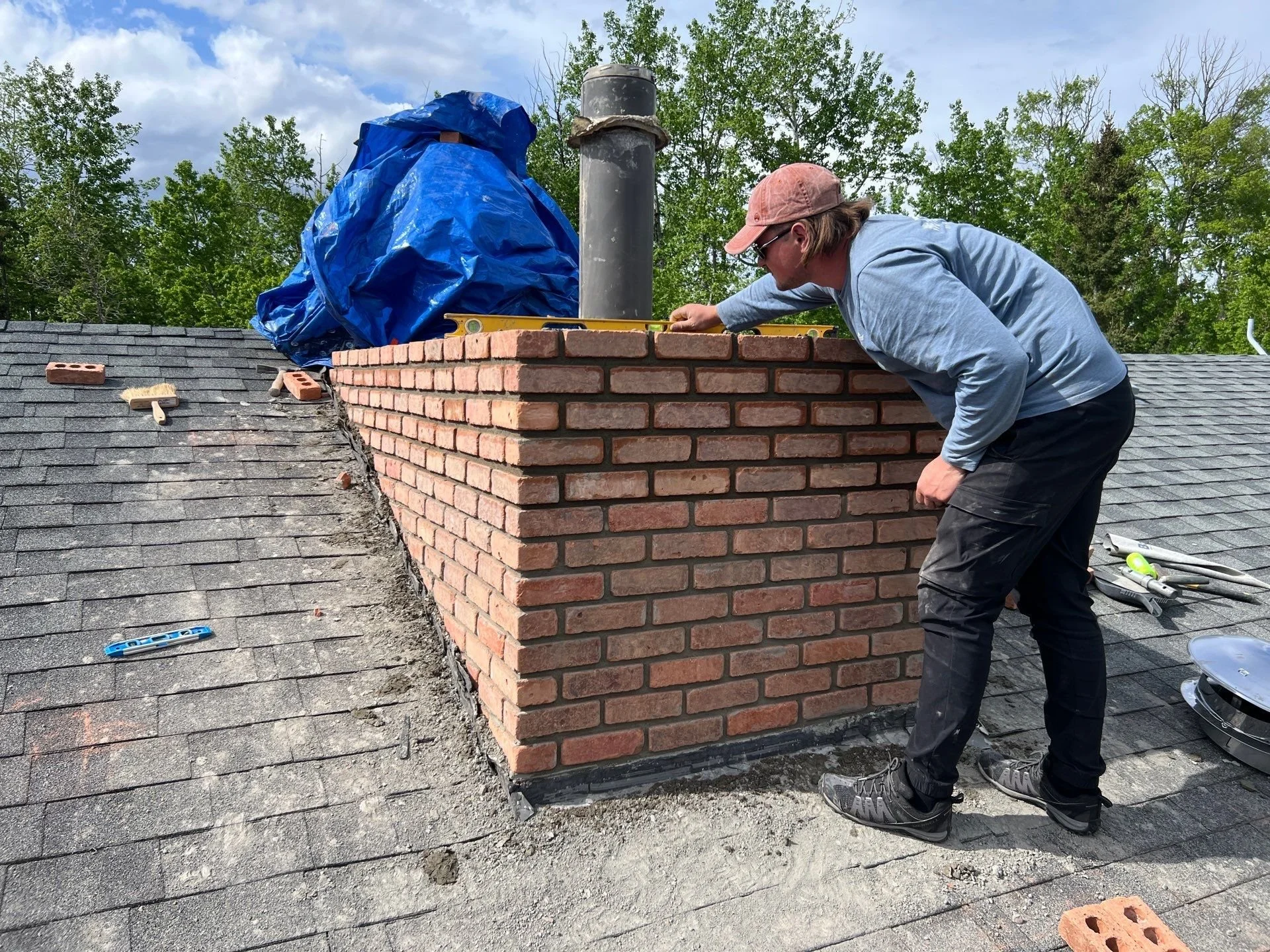
If you look around almost any neighborhood, you’ll start noticing it:
Flaking brick
Crumbling mortar
Chunks missing from the chimney
Pieces of masonry on the roof or ground
A lot of homeowners assume:
“It’s just old age.”
But in reality?
Most brick chimney damage starts at the very top.
And usually, chimney deterioration is caused by an improper cap.
At Weatherproof Roofing Inc., we correct failing chimneys with masonry repairs Edmonton homeowners can trust every year — and the root cause is almost always the same design flaw.
Let’s break it down.
Why brick chimneys fail so often here
Alberta’s climate is tough on masonry:
Snow accumulation
Ice buildup
Freeze–thaw cycles
Spring melt
Driving rain
Brick is strong — but it’s also porous.
Which means it absorbs water like a sponge.
So when water repeatedly soaks into brick and then freezes?
It expands.
And when water expands, it literally breaks the brick apart from the inside.
This is called chimney spalling — and it’s why you see chimney bricks falling off, cracking, and flaking.
But here’s the key:
The water usually enters from the top.
The common problem: mortar caps with no overhang
Most older chimneys were built with a simple mortar crown or cap.
These typically:
Sit flat on top
Have little or no overhang
No drip edge
No water control
So what happens?
When snow melts or rain falls:
Water runs straight off the cap
Down the brick faces
Into the masonry
Soaks in
Freezes
Expands
Breaks the brick apart
Year after year, this cycle slowly destroys the chimney.
No matter how good the brick is, it won’t win that battle.
Why sealing or patching isn’t enough
Some homeowners try to fix chimney bricks by:
Caulking cracks
Repointing mortar
Adding sealers
These might help temporarily…
But they don’t fix the real issue:
Water is still running down the brick.
If you don’t control the water, the damage continues, until a proper chimney masonry repair is performed.
The proper solution: a concrete cap with overhang & drip edge
A properly built chimney cap isn’t just a lid.
It’s a water management system.
The right design includes:
✔ Concrete construction
Much more durable than mortar alone
✔ Overhang past the brick
So water drips off away from the chimney
✔ Drip edge / underside trench (kerf cut)
Forces water to drop straight down instead of clinging and running back onto the brick
✔ Proper slope
So water sheds quickly
This small design detail makes a massive difference.
Instead of soaking the brick…
Water simply falls away.
Which dramatically extends the life of the chimney.
Repair vs replacement: when to act
If you’re seeing:
Flaking or peeling brick
Loose masonry
Cracked mortar
Pieces falling off
Rusting or damaged caps
Water staining
It’s best to address it sooner rather than later.
Chimney damage accelerates quickly once water gets inside.
And falling masonry can become a safety issue — not just cosmetic.
Our approach to brick chimney restoration
At Weatherproof Roofing, we typically:
✔ Repair or replace damaged brick
✔ Repoint mortar joints
✔ Stabilize loose areas
✔ Remove failing mortar crowns
✔ Install a proper concrete cap with overhang & drip edge
✔ Ensure flashing integrates correctly with the roof
The goal isn’t just to “patch it.”
It’s to reset the chimney’s lifespan for decades.
We want you to fix it once — not every few years.
Final thought
Most chimney damage isn’t because the brick is weak.
It’s because water isn’t being controlled.
Fix the cap → protect the brick → extend the life.
Simple, but incredibly effective.
Noticing chimney damage?
If your chimney is cracking, flaking, or dropping pieces, we’re happy to inspect it and give you a straight answer on whether it needs repair or a proper cap upgrade. From addressing chimney water damage to performing chimney spalling repairs, we offer effective chimney repair Edmonton homeowners can trust.
A small fix now can prevent a full rebuild later.
Reach out to Weatherproof Roofing and we’ll make sure your chimney is built to handle Alberta’s winters for years to come.